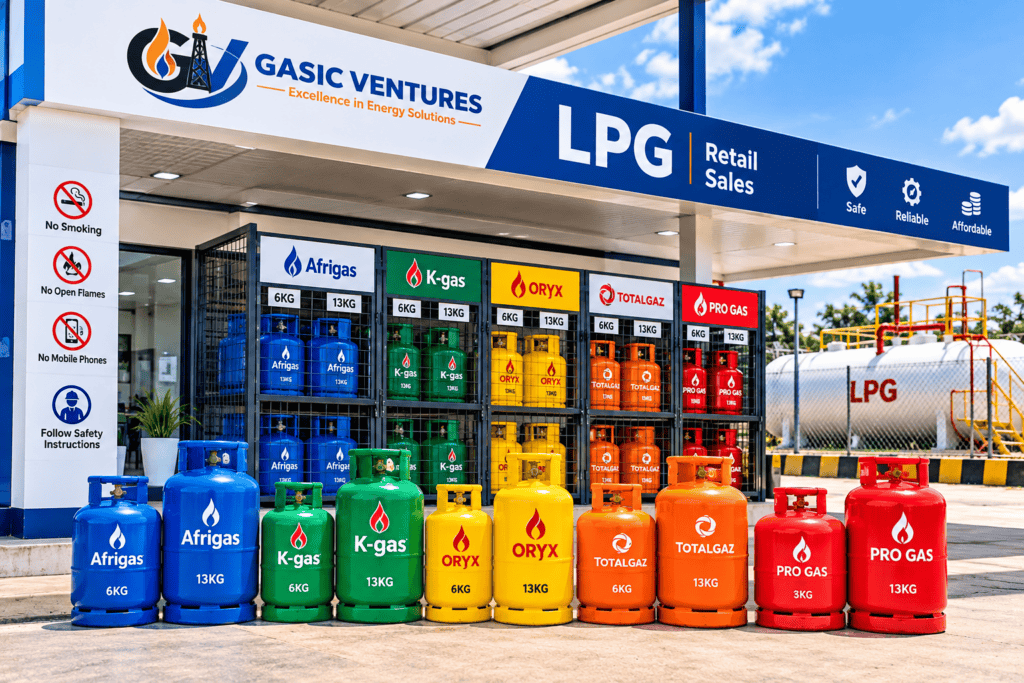
Kenya’s petroleum sector operates within a continuously evolving regulatory framework. For petroleum businesses, staying compliant is no longer simply about obtaining a licence and displaying it at the facility. Businesses must also understand the regulations governing construction, transportation, product quality, LPG operations, common-user facilities, safety and ongoing operations.
In 2025, Kenya introduced a number of important petroleum regulations covering different parts of the petroleum value chain. These regulations affect petroleum retailers, LPG businesses, transporters, storage facilities, logistics operators, common-user facilities and other petroleum-sector participants.
For businesses operating or planning to invest in the petroleum sector, understanding these requirements early can help reduce licensing delays, avoid costly compliance issues and support safer operations.
This guide explains the 2025 petroleum regulations in Kenya, the key Legal Notices businesses should know about, and what they mean for petroleum licensing and compliance.
What Are the 2025 Petroleum Regulations in Kenya?
The 2025 petroleum regulations are a set of regulations developed under Kenya’s petroleum and energy legislative framework to provide more detailed requirements for different petroleum-sector activities.
Among the major 2025 regulations relevant to downstream and midstream petroleum businesses are:
- Petroleum road transportation
- Petroleum business licensing and logistics facility construction permits
- Common-user petroleum facilities
- Petroleum products quality management
- Retail dispensing site construction and licensing
- Liquefied petroleum gas (LPG)
The regulations were published through different Legal Notices and provide requirements relating to licensing, construction, operations, safety, product quality, access to facilities and regulatory compliance.
For a petroleum business, the important point is that different activities can trigger different regulatory requirements.
A petrol station, for example, may have different requirements from an LPG storage facility, petroleum tanker operator or petroleum bulk storage facility.
Key 2025 Petroleum Regulations Businesses Should Know
1. Petroleum Road Transportation Regulations – Legal Notice 182 of 2025
The Petroleum (Licensing of Petroleum Road Transportation Business) (No. 2) Regulations, 2025 establish requirements for businesses involved in transporting petroleum products by road.
This framework is particularly relevant to petroleum transport companies, tanker owners and petroleum tanker drivers.
Depending on the activity, regulatory requirements can include:
- Petroleum road transportation business licensing
- Petroleum road tanker permits
- Petroleum tanker driver certification
- Journey planning
- Designated tanker parking
- Vehicle and equipment requirements
- Tracking and monitoring
- Emergency response arrangements
- Accident and incident reporting
- Safety and environmental obligations
A petroleum transporter therefore needs to consider more than simply owning a compliant tanker.
The business, vehicle and driver may each have regulatory requirements that need to be satisfied.
This is particularly important when setting up a petroleum transportation business because missing one component can affect the ability to operate legally.
2. Petroleum Business Licensing and Logistics Facility Construction Permits – Legal Notice 183 of 2025
The Petroleum (Business Licensing and Petroleum Logistics Facility Construction Permit) (No. 2) Regulations, 2025 are particularly important for businesses developing petroleum logistics infrastructure.
They provide a regulatory framework for petroleum business licensing and construction permits for relevant petroleum facilities.
For investors developing petroleum infrastructure, this reinforces an important principle:
Do not treat construction and operation as the same regulatory stage.
A business may need to obtain the appropriate construction approvals and permits before developing a facility and subsequently obtain the relevant operating licence before commencing regulated petroleum activities.
This distinction is important for projects such as:
- Petroleum storage facilities
- Logistics facilities
- Petroleum depots
- Other regulated petroleum infrastructure
Starting construction without understanding the applicable regulatory approval pathway can expose a project to delays, redesign costs and compliance problems.
3. Common User Petroleum Facilities – Legal Notice 184 of 2025
The Petroleum (Operation of Common User Petroleum Facilities) (No. 2) Regulations, 2025 establish requirements for common-user petroleum facilities.
These can include facilities such as:
- Petroleum bulk storage facilities
- Petroleum pipeline transportation systems
- Petroleum marine jetty systems
- Aviation refuelling hydrant systems
- Petroleum truck-loading facilities
- LPG pipeline systems
- LPG storage facilities
- LPG cylinder-refilling facilities
- Rail tank-wagon loading facilities
A person intending to operate a common-user petroleum facility requires the relevant licence.
The regulations also address issues such as:
- Capacity utilisation
- Open access
- Non-discrimination between users
- Capacity utilisation contracts
- Tariffs
- Facility operations
- Safety and environmental considerations
- Reporting obligations
This is especially relevant to petroleum infrastructure developers and operators whose facilities are intended to serve multiple licensed petroleum businesses.
4. Petroleum Products Quality Management – Legal Notice 185 of 2025
Product quality is one of the most important aspects of petroleum-sector compliance.
The Petroleum (Products Quality Management) (No. 2) Regulations, 2025 establish requirements relating to the quality management of refined petroleum products.
The regulations address areas including:
- Product specifications
- Sampling and testing
- Marking of petroleum products
- Quality certification
- Accredited laboratory testing
- Product storage
- Non-compliant petroleum products
- Sampling by regulatory authorities
- Corrective measures for non-compliance
For example, refined petroleum products must comply with applicable Kenya Standards or approved international standards.
The regulations also provide for marking of specified petroleum products and allow sampling and testing at locations including retail dispensing sites, bulk storage sites and petroleum tankers.
This means petroleum businesses should not view quality compliance as something that only concerns importers.
Retailers, storage operators and transporters can also be affected.
Why product quality compliance matters
Selling or handling non-compliant petroleum products can lead to serious regulatory consequences.
Businesses should therefore maintain proper:
- Product documentation
- Quality certificates
- Sampling records
- Storage records
- Delivery documentation
- Supplier records
- Inspection and testing records
Good documentation can be critical when demonstrating compliance during an inspection or investigation.
5. Retail Dispensing Site Construction and Licensing – Legal Notice 188 of 2025
For petrol station developers and operators, the Petroleum (Retail Dispensing Site Construction and Licensing) (No. 2) Regulations, 2025 are particularly important.
These regulations provide the framework for the construction and licensing of retail dispensing sites.
This is highly relevant to businesses planning to establish:
- Petrol stations
- Diesel retail facilities
- Petrol and diesel dispensing sites
- Retail facilities offering additional petroleum-related services
One of the most important considerations is the relationship between site development, construction approval and operating licensing.
A business should not assume that securing land automatically means the site can be developed as a petrol station.
Before construction, investors should consider matters such as:
- Land ownership or lawful occupation
- Site suitability
- Planning and development approvals
- Environmental requirements
- Facility design
- Fire and safety requirements
- Petroleum regulatory approvals
- Construction permits
- Technical inspections
- Commissioning requirements
- Operating licence requirements
Early regulatory planning can prevent expensive mistakes.
6. LPG Regulations – Legal Notice 189 of 2025
The Petroleum (Liquefied Petroleum Gas) (No. 2) Regulations, 2025 provide an important regulatory framework for LPG businesses in Kenya.
The regulations are relevant to different LPG activities across the value chain, including aspects of:
- LPG storage
- LPG filling
- LPG transportation
- LPG retail
- LPG facilities
- LPG safety
- LPG installations
- Regulatory inspections
- Compliance obligations
LPG businesses should therefore identify the specific activity they intend to undertake before determining which approvals and licences are applicable.
For example, an LPG retail business may have different requirements from a business involved in bulk storage, cylinder filling or transportation.
Businesses should also pay close attention to facility safety, cylinder handling, fire protection, weighing equipment, storage arrangements and other technical requirements.
What Do the 2025 Regulations Mean for Petrol Station Owners?
For petrol station owners and investors, regulatory compliance should be considered throughout the entire project lifecycle.
A typical project may involve:
Site selection → Planning → Environmental approvals → Design → Construction approval → Construction → Inspection → Commissioning → Operating licence → Ongoing compliance
Each stage can involve different regulatory considerations.
A common mistake is to focus only on obtaining the final operating licence.
In reality, regulatory compliance begins much earlier.
For a new petrol station, investors should therefore establish the applicable approval pathway before committing substantial capital to construction.
What Do the 2025 Regulations Mean for LPG Businesses?
The LPG sector requires particularly strong attention to safety and facility compliance.
Before establishing an LPG business, operators should determine whether the proposed activity involves:
- Retail of LPG cylinders
- LPG storage
- Cylinder filling
- LPG transportation
- Bulk LPG storage
- LPG autogas
- LPG installations
- LPG distribution
Each activity can have its own regulatory requirements.
For LPG retailers, for example, businesses may need documentation relating to the business, directors, taxation, county approvals, fire safety, cylinder ownership or distributorship arrangements and other requirements applicable to the specific licence.
Businesses should therefore avoid relying on generic information about “LPG licences” and instead identify the exact activity and facility category.
What Do the Regulations Mean for Petroleum Transporters?
Petroleum transportation requires a coordinated compliance approach.
A transporter should consider three separate dimensions:
1. The business
The transportation company needs the appropriate petroleum road transportation business licence.
2. The vehicle
The petroleum road tanker requires the applicable permit and supporting technical documentation.
3. The driver
The driver needs the appropriate petroleum tanker driver certification.
Additional requirements can relate to:
- Vehicle inspection
- Tank calibration
- Fire safety
- Tracking
- Journey plans
- Emergency response
- Parking
- Incident reporting
Our detailed guide on petroleum transport regulations in Kenya provides further information on these requirements.
Petroleum Compliance Is More Than Having a Licence
One of the biggest misconceptions in the petroleum industry is that compliance ends once a licence has been issued.
It does not.
A petroleum business can have a valid licence and still experience compliance problems if it:
- Changes its facility without the required approvals
- Operates equipment that does not meet applicable standards
- Fails to maintain safety systems
- Allows licences or certificates to expire
- Fails to keep required records
- Handles petroleum products improperly
- Uses unqualified personnel for regulated activities
- Fails to report incidents
- Breaches environmental requirements
- Operates outside the scope of its licence
This is why businesses should approach compliance as an ongoing management process rather than a one-time licensing exercise.
A Practical Petroleum Compliance Checklist
Petroleum businesses should periodically review the following areas:
Licensing
- Is the correct petroleum licence in place?
- Is the licence still valid?
- Does the licence cover the actual activity being undertaken?
- Are renewal dates being monitored?
Facility compliance
- Does the facility match the approved design?
- Have modifications been properly approved?
- Are safety systems functional?
- Are required inspections and tests up to date?
Documentation
Maintain current records relating to:
- Licences
- Permits
- Certificates
- Inspection reports
- Calibration certificates
- Fire certificates
- Environmental documentation
- Product quality documentation
- Training records
- Emergency response arrangements
- Incident reports
Health, safety and environment
Businesses should continuously evaluate:
- Fire risks
- Spill prevention
- Emergency preparedness
- Safe product handling
- Personal protective equipment
- Environmental controls
- Waste management
- Incident response
Staff and contractors
Personnel involved in regulated petroleum activities should have the appropriate competence, training, certification and authorisation applicable to their roles.
Common Petroleum Compliance Mistakes
1. Starting construction before confirming regulatory requirements
This can result in costly modifications when the facility does not satisfy applicable requirements.
2. Using outdated regulatory information
Petroleum regulations change.
Information from an old website, social media post or previous application should not automatically be treated as the current requirement.
3. Treating every petroleum business the same
A petrol station, LPG retailer, petroleum transporter and bulk storage facility do not have identical regulatory requirements.
4. Waiting until expiry to begin renewal
Licence and permit renewal should be planned well in advance.
5. Ignoring operational compliance
Obtaining a licence is only one part of regulatory compliance.
6. Poor record keeping
A business may have completed an inspection or calibration but still face difficulties if it cannot produce supporting records when required.
How Businesses Can Prepare for Regulatory Changes
Instead of waiting for a regulatory problem, petroleum businesses can establish a simple compliance management system.
Step 1: Identify your regulated activities
List every petroleum activity your business performs.
Step 2: Identify applicable licences and permits
Map each activity against the relevant regulatory requirement.
Step 3: Review facility approvals
Confirm that the current facility corresponds with approved plans and regulatory requirements.
Step 4: Create a compliance calendar
Track:
- Licence expiry dates
- Permit renewals
- Inspection dates
- Calibration dates
- Fire certificate expiry
- Training requirements
- Environmental obligations
Step 5: Conduct periodic compliance audits
Do not wait for a regulatory inspection to discover gaps.
A periodic internal or independent compliance review can identify issues early.
Step 6: Keep regulatory information current
Monitor changes to laws, regulations, guidelines, standards and regulatory notices affecting your business.
How Gasic Ventures Can Support Petroleum Businesses
Understanding petroleum regulations can be challenging, particularly when a project involves several approvals and regulatory requirements.
Gasic Ventures provides petroleum and gas consultancy services in Kenya, supporting businesses and investors with regulatory and compliance-related needs.
Our areas of support include:
- Petroleum licensing consultancy
- Petroleum compliance support
- Petroleum permits and regulatory approvals
- LPG licensing and compliance consultancy
- Petrol station project advisory
- Petroleum project regulatory support
- Regulatory documentation review
- Compliance gap assessment
- Licensing application support
- Regulatory follow-up and coordination
The objective is simple: help businesses understand their regulatory obligations before they become costly problems.
Frequently Asked Questions
What are the main 2025 petroleum regulations in Kenya?
Among the key regulations are those covering petroleum road transportation, petroleum business licensing and logistics facility construction permits, common-user petroleum facilities, petroleum product quality management, retail dispensing site construction and licensing, and LPG.
Do all petroleum businesses require the same licence?
No. Licensing depends on the petroleum activity being undertaken, the type of facility and the applicable regulatory framework.
Do I need approval before constructing a petrol station?
A petroleum retail project may require regulatory and other statutory approvals before and during construction. The applicable requirements should be established before construction begins. Read about stations requirements here
Are LPG businesses regulated in Kenya?
Yes. LPG activities are regulated and different LPG activities can have different licensing, safety and technical requirements.
Is a petroleum licence enough to remain compliant?
No. Businesses must continue meeting applicable operational, safety, environmental, technical, reporting and documentation requirements throughout the life of the regulated activity.
Are the 2026 petroleum regulations already law?
Not necessarily. Some instruments currently listed by EPRA for 2026 are identified as draft regulations. Businesses should verify the legal status of an instrument before treating it as an enforceable requirement.
Final Takeaway
The 2025 petroleum regulatory changes reinforce an important reality for businesses operating in Kenya’s petroleum sector:
Petroleum compliance is a continuous process, not a one-time licence application.
Whether you are developing a petrol station, operating an LPG business, transporting petroleum products, managing a storage facility or developing petroleum infrastructure, regulatory requirements should be considered from the planning stage through construction and into daily operations.
The most effective approach is to identify the applicable regulatory requirements early, maintain accurate documentation, monitor licence and permit obligations, and periodically review the business against current requirements.
If you are planning a petroleum or LPG project in Kenya or need assistance reviewing your regulatory obligations, Gasic Ventures can support you with petroleum licensing, compliance, permits, approvals and project regulatory advisory.
Need help with a petroleum or gas project? Contact Gasic Ventures for professional regulatory and compliance support.